
Children are natural explorers, driven by curiosity, energy, and imagination. While classrooms provide structure and guidance, there’s one environment that continues to prove essential for a child’s holistic development: the outdoors.
At Rainbow Childhood Education Center, outdoor time isn’t just recess; it’s an integral part of our learning model. In this article, we’ll dive into the wide-ranging benefits of outdoor play for preschoolers and why it should be a priority in every early childhood setting.
Why Outdoor Play Is More Than Just Fun
The idea that “kids need to go outside” isn’t just nostalgic advice from older generations; it’s backed by decades of developmental research. Outdoor environments offer unique experiences that indoor classrooms simply can’t replicate. Whether it’s running barefoot on grass, digging in the soil, or watching insects, these activities engage multiple senses, foster movement, and open the door to discovery.
More importantly, outdoor play supports growth in areas often overlooked in traditional education models: resilience, environmental awareness, and emotional well-being.
Physical Development Through Movement
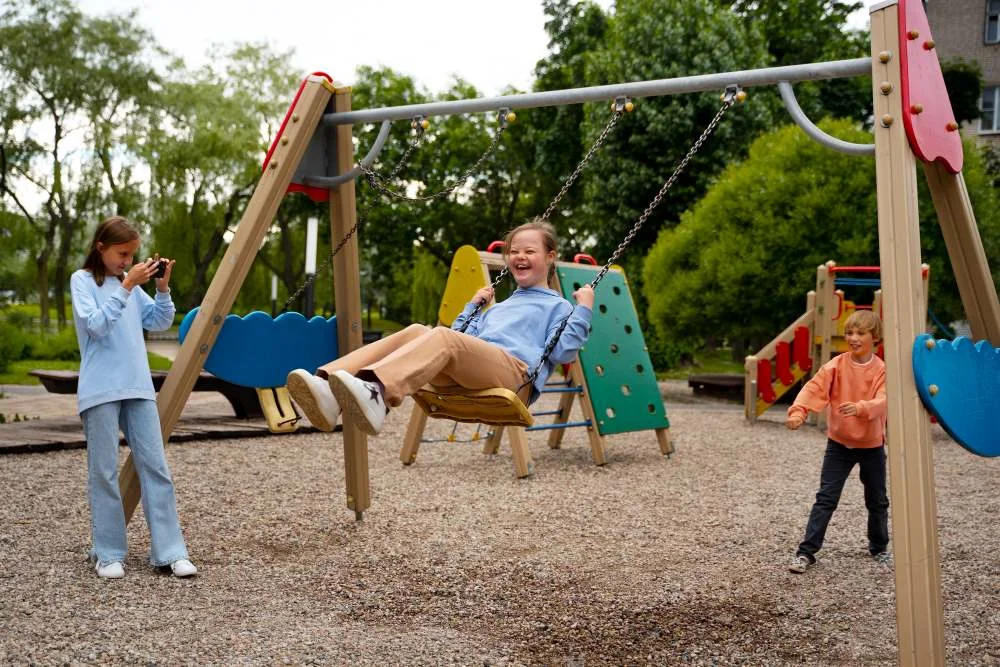
One of the most visible and immediate outcomes of outdoor play is physical development. Unlike confined indoor settings, outdoor areas provide ample space for significant motor activity. Children climb, jump, balance, swing, and chase, all of which improve coordination, agility, and muscle strength.
Exposure to natural surfaces, such as uneven grass or gravel, also helps preschoolers develop better balance and body awareness. This is especially valuable during the early years when gross motor skills are rapidly forming.
At Rainbow Childhood, our outdoor spaces are intentionally designed to include a mix of open areas and natural play elements that challenge and strengthen the body in safe, engaging ways.
Boosting Cognitive Skills and Curiosity
Beyond movement, outdoor settings spark natural problem-solving and critical thinking. A child wondering how to build a dam in the sandbox, or how to climb up a slope without slipping, is learning through trial and error, developing logic, planning, and perseverance.
Time outside also stimulates the senses and creates richer sensory experiences than indoor environments. From the smell of wet soil to the sound of birds, these inputs support neurological development and long-term memory.
Recent studies have even linked time in nature to improved attention spans and executive function, particularly in young children who struggle with focus indoors.
Supporting Emotional Wellness and Self-Regulation
Children thrive emotionally when they have opportunities to release energy, experience autonomy, and engage with natural environments. Outdoor play reduces stress, boosts mood, and helps children develop emotional resilience.
Being in nature, even in simple ways like watching clouds or feeling the wind, helps regulate the nervous system. This is especially important in today’s high-stimulation world, where children often face overstimulation from screens and structured schedules.
At Rainbow Childhood, we use outdoor time not just for active play, but also for quiet moments of reflection, whether it’s reading a book under a tree or tending to our garden beds. These moments create calm, encourage mindfulness, and help children regulate their emotions.
Strengthening Social Skills Through Natural Interaction
Outdoor play tends to involve more collaborative, imaginative, and unstructured interaction than indoor activities. Children negotiate roles (“You be the explorer, I’ll be the animal”), solve problems together, and navigate social boundaries.
Because the play is less adult-directed, children have more opportunities to practice leadership, conflict resolution, and empathy on their terms. They learn how to include others, set group rules, and adapt their ideas based on peer feedback.
In our programs, we observe some of the most meaningful social growth happen not during group circle time, but in the sandbox, on the climbing logs, or while working together to build a fort from branches.
Encouraging Healthy Risk-Taking
Outdoor play often presents challenges that push children slightly outside their comfort zone, such as climbing a higher structure, jumping across rocks, or trying something new. These are calculated risks that help develop courage, self-trust, and decision-making skills.
When given the chance to test their physical limits in a safe and supervised setting, children develop a healthy sense of autonomy. They learn what their bodies can do, how to assess danger, and how to recover from mistakes.
At Rainbow Childhood, our educators are trained to support this kind of play not by over-intervening, but by guiding children to make smart choices and cheering them on as they grow.
Fostering a Connection With Nature
Outdoor play naturally cultivates a sense of wonder and respect for the environment. Children who spend time in nature learn to care for living things, notice seasonal changes, and understand basic ecological principles, such as cause and effect.
We’ve seen preschoolers at Rainbow Childhood take pride in watering plants, observing caterpillars, or rescuing worms after it rains. These experiences build the foundation for environmental responsibility later in life.
Early exposure to green spaces has also been linked to long-term benefits, including improved mental health and stronger academic outcomes, according to multiple research reviews on child development and outdoor learning.
A Break From Screens and Structured Spaces
With increasing screen exposure at home and even in some classrooms, outdoor play offers a necessary digital detox. It reintroduces boredom, open-ended creativity, and physical connection—essential elements for balanced development.
Unlike digital entertainment, outdoor play doesn’t entertain children passively; it invites them to create their own stories, explore limits, and shape the experience themselves. This kind of play builds confidence, motivation, and a love for learning.
We design our schedules at Rainbow Childhood to ensure ample outdoor time every day, regardless of weather (with the right gear). Because real-world learning doesn’t stop at the classroom door.
The Lasting Impact of Outdoor Play
The benefits of outdoor play in early childhood extend far beyond what we might expect. From building physical strength and sharpening minds to nurturing emotional health and social resilience, outdoor play is a powerful, natural tool for whole-child development.
At Rainbow Childhood Education Center, we believe that the best learning happens not just behind desks, but under trees, across playgrounds, and with dirt under our fingernails. Our outdoor programs are thoughtfully planned to support every child’s growth in meaningful and lasting ways.
Interested in seeing how we integrate outdoor learning into everyday preschool life? Visit rainbowchildhood.com to learn more or book a tour today.
Frequently Asked Questions
Why is outdoor play important for preschoolers?
Outdoor environments offer unique sensory experiences that build resilience, emotional well-being, and environmental awareness things indoor classrooms simply can’t replicate.
How does outdoor play support physical development?
Activities like climbing, jumping, and balancing improve coordination and muscle strength, while natural surfaces like grass and gravel develop better balance and body awareness.
Can outdoor play improve a child's focus and cognitive skills?
Yes. Trial-and-error play builds problem-solving and critical thinking, and studies have linked time in nature to improved attention spans and executive function in young children.
How does outdoor play help with emotional and social development?
Nature helps reduce stress and regulate emotions, while unstructured play gives children space to practice empathy, leadership, and conflict resolution on their own terms.
Is outdoor play just about physical activity?
Not at all. It also fosters creativity, healthy risk-taking, a connection with nature, and a break from screens — all contributing to long-term academic and mental health outcomes.