
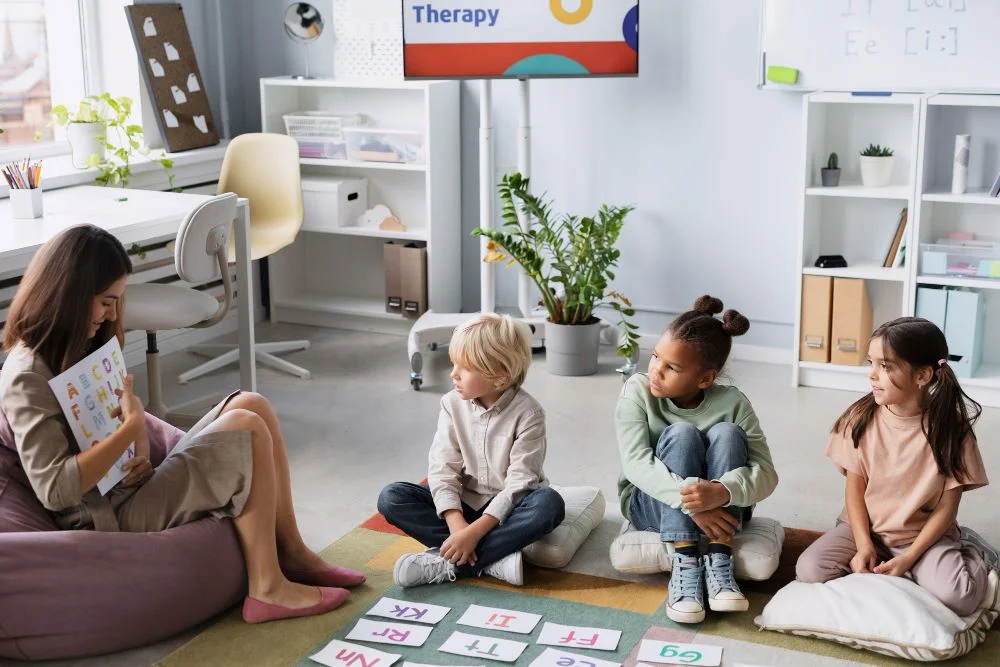
In a world where academic benchmarks often dominate conversations about early education, the idea of children “just playing” might seem like a luxury. But the truth is, play is one of the most powerful tools we have to help children learn. At Rainbow Childhood Education Center, we don’t see play as the opposite of learning; we see it as the pathway to it. Our approach to learning through play in daycare is intentional, research-informed, and centered on child development.
In this blog, we explore why learning through play matters, what it looks like in practice, and how it supports preschoolers in building a strong foundation for school and for life.
What Does “Learning Through Play” Really Mean?
Learning through play is more than letting children roam with toys. It’s a structured yet flexible approach where children engage in activities that are fun, age-appropriate, and designed to develop specific skills across multiple domains.
At its core, play-based learning includes:
- Choice and autonomy: Children initiate or lead the activity.
- Purposeful engagement: The activity supports development (e.g., motor, language, social).
- Emotional safety: Play invites risk-taking in a low-stress environment.
- Reflection and repetition: Children revisit and evolve their ideas naturally.
Unlike passive instruction, play encourages active exploration, where children learn cause and effect, test hypotheses, and develop curiosity organically. Studies, such as those discussed by the National Association for the Education of Young Children (NAEYC), emphasize that play supports deep, lasting learning by connecting emotional engagement with cognitive development, without needing worksheets or memorization.
1. Play Builds a Foundation for Cognitive and Academic Growth
Children don’t need flashcards to learn math or literacy; they need meaningful experiences. When preschoolers build towers, compare sizes, sort objects, or sing rhyming songs, they’re absorbing early academic concepts in ways that make sense to them.
Here’s how play supports key academic domains:
- Math: Sorting, pattern recognition, counting, comparing, and measuring.
- Literacy: Storytelling, letter recognition, vocabulary, listening comprehension.
- Science: Observing nature, asking questions, experimenting with materials.
- Problem-Solving: Trial and error, spatial reasoning, and flexible thinking.
For example, when a child builds a bridge with blocks and it collapses, they test new strategies, observe outcomes, and build resilience, all without a teacher needing to “instruct.” This is real learning, rooted in context and emotion.
At Rainbow Childhood, we design our play environments to include both open-ended materials and structured invitations to learn, giving children the opportunity to engage at their own pace while developing critical academic skills.
2. Social and Emotional Learning Happens Best in Playful Settings
One of the most overlooked aspects of play is its role in developing social and emotional intelligence. Through imaginative and cooperative play, children practice essential life skills, such as:
- Taking turns and sharing
- Managing frustration
- Understanding others’ perspectives
- Solving conflicts through words
When children pretend to be doctors, shopkeepers, or superheroes, they’re not just having fun, they’re learning to empathize, negotiate roles, and build a sense of self. These moments, guided gently by educators, allow children to practice complex social behaviors in a low-pressure context.
We’ve seen countless preschoolers at Rainbow Childhood grow from shy observers into confident collaborators simply by engaging in regular, guided play with their peers. And because our educators are trained to scaffold these experiences, we help children reflect on their actions, name their emotions, and learn positive communication.
3. Physical Development Is Strengthened Through Active Play
Preschoolers are in a critical stage of motor development, and play provides the ideal platform for strengthening their bodies and coordination. From climbing structures to threading beads, every movement helps build control, balance, and strength.
Play supports two key areas of physical growth:
- Gross motor skills: running, jumping, climbing, throwing, dancing.
- Fine motor skills: grasping, cutting, stacking, drawing, pouring.
In a typical day at our daycare, children might start the morning balancing on stepping stones, then move on to a sensory bin filled with buttons and tongs to build hand strength. Each of these activities is embedded in our play-based framework because we know how essential motor development is not just for physical well-being, but for writing, dressing, and daily independence later on.
4. Play Encourages Critical Thinking and Curiosity
In traditional academic settings, questions often come from the teacher. But in a play-based environment, the questions come from the children.
Why won’t the tower stand?
What happens if I mix these two paints?
How can we make this ramp faster?
These are the seeds of scientific inquiry. When children are given the freedom to experiment, they become natural learners. Our role as educators is to observe, ask open-ended questions, and provide materials that deepen their investigations.
This kind of learning is durable because it’s self-directed. Children remember what they discover through play far more than what they are told without context.
5. A Love for Learning Starts in Joyful Experiences
At Rainbow Childhood, we believe children should associate learning with joy, not pressure. When daycare becomes a place of connection, exploration, and creativity, children are far more likely to enter formal schooling with confidence, curiosity, and motivation.
Rather than seeing learning as something they “have to do,” play-based learning helps children view challenges as opportunities. This mindset, known as a growth mindset, has been linked to academic success and emotional resilience in later years.
We want children to leave daycare believing they are capable learners. And the best way to achieve that is by letting them experience success, discovery, and autonomy through play.
What Learning Through Play Looks Like at Rainbow Childhood
Our daily schedule integrates play into every corner of the classroom, and beyond. Some examples include:
- Construction Zone: Building cities with blocks and figurines to develop math and planning skills.
- Pretend Bakery: Mixing “ingredients,” measuring with cups, and role-playing customers and bakers.
- Nature Walk Journals: Observing insects and plants, then drawing or dictating their findings.
- Sensory Science Table: Mixing water, sand, and soap to learn cause and effect.
Each of these moments is intentional. Teachers document children’s observations, extend learning through conversation, and reflect on emerging interests to shape future activities.
Give Your Child the Gift of Play-Based Learning
Learning through play in daycare is not about letting children “go wild.” It’s about giving them the space, tools, and trust to explore their world with joy and purpose. It’s where emotional resilience is built, where curiosity takes flight, and where early learning feels like magic.
At Rainbow Childhood Education Center, we are proud to offer a learning-through-play approach that respects childhood, honors individuality, and builds a strong foundation for lifelong success.Want to see how play-based learning comes to life in our classrooms? Visit Rainbow childhood to schedule a tour and learn more about our early education programs.
What is learning through play in daycare?
Learning through play in daycare is an intentional teaching approach where children develop academic, social, and motor skills through hands-on, engaging activities. Instead of passive instruction, children explore, experiment, and discover concepts naturally through guided play experiences.
How does play-based learning prepare children for kindergarten?
Play-based learning builds early literacy, math awareness, problem-solving skills, and executive function. It also strengthens social-emotional skills like listening, cooperation, and self-regulation, all essential for a smooth transition to kindergarten.
Is learning through play as effective as traditional academic instruction?
Yes. Research shows that young children retain information better when learning is interactive and meaningful. Play connects emotional engagement with cognitive development, leading to deeper understanding and long-term skill growth.
How does play in daycare support social and emotional development?
Through cooperative games and imaginative play, children practice sharing, resolving conflicts, expressing emotions, and understanding others’ perspectives. These daily interactions help build empathy, confidence, and communication skills.
What should parents look for in a play-based daycare program?
Parents should look for trained educators, intentional classroom setups, open-ended materials, structured routines, and opportunities for guided exploration. A strong play-based program balances freedom with purposeful learning goals.
Frequently Asked Questions
What is learning through play in daycare?
Learning through play in daycare is an intentional teaching approach where children develop academic, social, and motor skills through hands-on, engaging activities. Instead of passive instruction, children explore, experiment, and discover concepts naturally through guided play experiences.
How does play-based learning prepare children for kindergarten?
Play-based learning builds early literacy, math awareness, problem-solving skills, and executive function. It also strengthens social-emotional skills like listening, cooperation, and self-regulation, all essential for a smooth transition to kindergarten.
Is learning through play as effective as traditional academic instruction?
Yes. Research shows that young children retain information better when learning is interactive and meaningful. Play connects emotional engagement with cognitive development, leading to deeper understanding and long-term skill growth.
How does play in daycare support social and emotional development?
Through cooperative games and imaginative play, children practice sharing, resolving conflicts, expressing emotions, and understanding others’ perspectives. These daily interactions help build empathy, confidence, and communication skills.
What should parents look for in a play-based daycare program?
Parents should look for trained educators, intentional classroom setups, open-ended materials, structured routines, and opportunities for guided exploration. A strong play-based program balances freedom with purposeful learning goals.